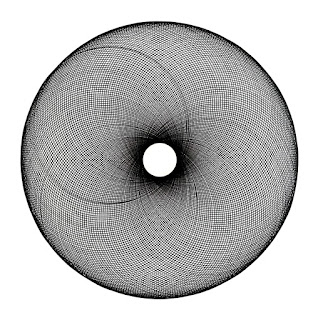
My painting for Pizza Express for Clockenflap
Was lucky enough to get the opportunity to paint a huge painting for Pizza Express for their booth at this years Clockenflap music festival! I haven't painted something this big in a while, as its over 5 meters long, and it was loads of fun just like the whole weekend!
Labels:
art,
artist,
clockenflap,
hong kong,
painting,
peter yuill,
pizza express,
pizzaexpress
Washi Jeans
![]() |
| The Weaver Japanese inks on Red Star Peking rice paper 52cm x 91cm 2012 |
I was lucky enough to be asked to create a custom illustration for the launch of the new Japanese denim brand Washi, so we took a little tour of one of the last remaining denim mills in Hong Kong for inspiration and I created my interpretation of a large denim weaver
Check out their fan page, Washi Jeans
Amical fine coffees
Amical Fine Coffees, everything has almost finished up with reno and they have opened for business!
1/F, 1 Sun Street, Wan Chai
Empires at war
During The Great War, all of the world's great powers were engaged in the largest conflict that humanity had ever seen. In a desperate attempt to break the trench warfare stalemate that locked up the western front, the British developed a whole new weapon, that tank.
![]() |
| Mark IV Japanese inks on Red Star Peking rice paper 50cm x 70cm |
![]() |
| Renault FT17 Japanese inks on Red Star Peking rice paper 50cm x 70cm |
![]() |
| A7V Japanese inks on Red Star Peking rice paper 50cm x 70cm |
IJN Mikasa
IJN Mikasa
Japanese inks on Red Star Peking rice paper
70cm x 137cm
Mikasa is
a pre-Dreadnought battleship of the Imperial Japanese Navy, launched in Britain
in 1900. She served as the
flagship of Admiral Tōgō Heihachirō during the Battle of the Yellow Sea on 10
August 1904, and the Battle of Tsushima on 27 May 1905 during the
Russo-Japanese War. The ship is
preserved as a museum ship at Yokosuka. Mikasa is the last remaining example of a pre-dreadnought
battleship anywhere in the world. She was named after Mount Mikasa in Nara,
Japan.
Following the 1894–1895 First Sino-Japanese War, and the forced return of the Liaodong Peninsula to China under Russian pressure, Japan began to build up its military strength in preparation for further confrontations. In particular, Japan initiated a ten-year naval build-up program, with the construction of six battleships and six armored cruisers at its core.
The last of these battleships, Mikasa, was ordered from the Vickers shipyard in Barrow-in-Furness, United Kingdom at the end of 1898, for delivery to Japan in 1902. That same year Japan also secured diplomatic and strategic support, by concluding the 1902 Anglo-Japanese Alliance with the world's strongest naval power. The United Kingdom shared Japan's wish to contain Russian expansionism in the Far East, especially to protect its interests in China and India.
Japanese inks on Red Star Peking rice paper
70cm x 137cm
Following the 1894–1895 First Sino-Japanese War, and the forced return of the Liaodong Peninsula to China under Russian pressure, Japan began to build up its military strength in preparation for further confrontations. In particular, Japan initiated a ten-year naval build-up program, with the construction of six battleships and six armored cruisers at its core.
The last of these battleships, Mikasa, was ordered from the Vickers shipyard in Barrow-in-Furness, United Kingdom at the end of 1898, for delivery to Japan in 1902. That same year Japan also secured diplomatic and strategic support, by concluding the 1902 Anglo-Japanese Alliance with the world's strongest naval power. The United Kingdom shared Japan's wish to contain Russian expansionism in the Far East, especially to protect its interests in China and India.
Fading Glory!
My first solo exhibition at The Cat Street Gallery is opening this upcoming Thursday, April the 19th!
Please come by to say hello and have a glass of wine from 6pm to 9pm.For more information you can view The Cat Street Gallery's >>website<<
Graf Zeppelin
Graf Zeppelin
Japanese inks on Red Star Peking rice paper
70cm x 137cm
The Zeppelin is a type of rigid airship pioneered by the German Count Ferdinand von Zeppelin in the early 20th century. It was based on designs he had outlined in 1874 and detailed in 1893. Given the outstanding success of the Zeppelin design, the term zeppelin in casual use came to refer to all rigid airships. After the outbreak of war, the German military made extensive use of Zeppelins as bombers and scouts.
The World War I defeat of Germany in 1918 halted the airship business temporarily. But under the guidance of Hugo Eckener, the deceased Count's successor, civilian zeppelins became popular in the 1920s. Their heyday was during the 1930s when the airships LZ 127 Graf Zeppelin and LZ 129 Hindenburg operated regular transatlantic flights from Germany to North America and Brazil. The Art Deco spire of the Empire State Building was originally if impractically designed to serve as a dirigible terminal for Zeppelins and other airships to dock. The Hindenburg disaster in 1937, along with political and economic issues, hastened the demise of the Zeppelin.
LZ 127 Graf Zeppelin operated commercially from 1928 to 1937. It was named after the German pioneer of airships himself. During its operating life, the airship made 590 flights covering more than a million miles.
Japanese inks on Red Star Peking rice paper
70cm x 137cm
The Zeppelin is a type of rigid airship pioneered by the German Count Ferdinand von Zeppelin in the early 20th century. It was based on designs he had outlined in 1874 and detailed in 1893. Given the outstanding success of the Zeppelin design, the term zeppelin in casual use came to refer to all rigid airships. After the outbreak of war, the German military made extensive use of Zeppelins as bombers and scouts.
The World War I defeat of Germany in 1918 halted the airship business temporarily. But under the guidance of Hugo Eckener, the deceased Count's successor, civilian zeppelins became popular in the 1920s. Their heyday was during the 1930s when the airships LZ 127 Graf Zeppelin and LZ 129 Hindenburg operated regular transatlantic flights from Germany to North America and Brazil. The Art Deco spire of the Empire State Building was originally if impractically designed to serve as a dirigible terminal for Zeppelins and other airships to dock. The Hindenburg disaster in 1937, along with political and economic issues, hastened the demise of the Zeppelin.
LZ 127 Graf Zeppelin operated commercially from 1928 to 1937. It was named after the German pioneer of airships himself. During its operating life, the airship made 590 flights covering more than a million miles.
Prussian S10
Prussian S10
Japanese inks on Red Star Peking rice paper
50cm x 70cm
2012
The Prussian S10 steam engine was an evolutionary development of the passenger train locomotive. Between 1910 and 1914 a total of 202 locomotives were built. The two prototypes were initially designated as S 8 class and only reclassified in 1912 to S 10. The majority were retired were retired by 1935, due to their high fuel consumption. Only three examples of the S10 survived the Second World War, as braking locomotives. The last S10 was retired in 1954.
Japanese inks on Red Star Peking rice paper
50cm x 70cm
2012
The Prussian S10 steam engine was an evolutionary development of the passenger train locomotive. Between 1910 and 1914 a total of 202 locomotives were built. The two prototypes were initially designated as S 8 class and only reclassified in 1912 to S 10. The majority were retired were retired by 1935, due to their high fuel consumption. Only three examples of the S10 survived the Second World War, as braking locomotives. The last S10 was retired in 1954.
RMS Titanic
RMS Titanic
Japanese Ink on Red Star Peking Rice Paper
70cm x 137cm
The Titanic I feel, is one piece that needs no introduction. Here's a more detailed view of the action down in close
Japanese Ink on Red Star Peking Rice Paper
70cm x 137cm
Subscribe to:
Posts (Atom)